Grzegorz Doroszenko – lider, gitara, aranżacje, kompozycje Jakub Klimiuk – gitara Jonas Kullhammar – saksofon tenorowy Jakub Kurek – trąbka Dominik Kisiel – klawisze Wojciech Warmijak – perkusja Paul Rutschka – bas
"In Search Of Waves"
Wydawca: V Records (2022)
Tekst: Mateusz Chorążewicz
Album "In Search of Waves" grupy Húrra, wydany w październiku 2022, przedstawia zaskakujące obrazy muzyczne, które odbiegają od wstępnych oczekiwań. Materiały prasowe wskazują, że lider zespołu, Grzegorz Doroszenko, czerpał inspirację z trzech lat spędzonych w Islandii, co sugerowałoby dźwięki pełne przestrzeni, surowości i nostalgii. Zamiast tego, otrzymujemy album pełen pulsującej energii, co w świecie fusion jest przyjemnym, choć nie nowatorskim zaskoczeniem dla ucha.
Kompozycje na płycie są złożone, wymykają się prostemu schematowi jazzowej narracji (temat -> solówki -> temat). Tutaj każdy utwór to mała opowieść, pełna zaskakujących zwrotów akcji i instrumentalnych dialogów. Momentami muzyka ta kojarzy się z brzmieniami EABS - niektórzy je uwielbią, inni niekoniecznie. Ja się zaliczam do pierwszej grupy.
Lider, Grzegorz Doroszenko, nie tylko komponuje, ale też aranżuje i gra na gitarze, serwując słuchaczom szeroki wachlarz efektów gitarowych. Udaje mu się osiągnąć bardzo interesujące brzmienia, wykraczające poza standardowe modyfikacje dźwiękowe tego instrumentu.
Jeżeli ktoś od perkusisty oczekuje spełnienia roli metronomu, który w razie potrzeby ratuje solistów czy wręcz cały zespół, Wojciech Warmijak zdecydowanie odbiega od tego stereotypu. Jego podejście do rytmu, fascynacja polimetrycznymi strukturami i innymi „rytmicznymi sztuczkami” czynią go pełnoprawnym uczestnikiem muzycznych dialogów. Perkusja Warmijaka nie służy jako ratunek dla zagubionych muzyków, lecz motywuje ich do większego skupienia i kreatywności.
Płyta, chociaż nie stawia na głowie polskiej sceny jazzowej, wyraźnie zaznacza swoją obecność i z pewnością znajdzie swoje miejsce w sercach miłośników gatunku, którzy cenią sobie fusion z niesztampowym podejściem. Nie jest to muzyka, która zmieni twoje życie, ale na pewno umili niejeden wieczór. Osobiście będę do niej wracał z przyjemnością.
Na koniec warto wspomnieć, że wykonawczo album stoi na bardzo wysokim poziomie. Wszystko jest na swoim miejscu, od produkcji po finalny miks, co w przypadku tak złożonej muzyki nie jest sprawą oczywistą.
Olaf Węgier - Tenor Saxophone, Bass Clarinet, Percussion; Jakub Kurek - Trumpet, Sequential Take 5; Paweł “Wuja HZG” Stachowiak - Bass guitar; Marcin Rak - Drums, Drum Machine; Marek “Latarnik” Pędziwiatr - Nord Stage 3, Moog Voyager, Upright Piano;
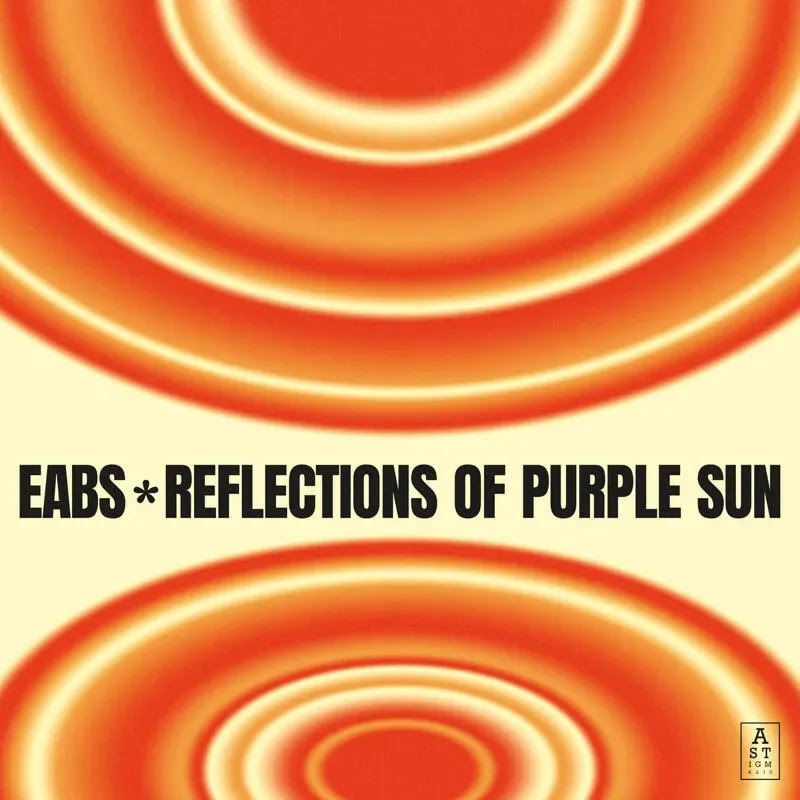
„Right a decade ago New Yorkers "Mostly Other People Do the Killing" made a lot of noise releasing their "Blue" album - a note-for-note reiteration of Miles Davis' "Kind of Blue". One of the well-known abroad Polish bands, Electro-Acoustic Beat Sessions (EABS) started their career five years ago deconstructing the renowned music of the best Polish artists like Krzysztof Komeda and international jazz greats from the past as well. Today on "Reflections of Purple Sun" they play the early Tomasz Stanko album "Purple Sun" in full.
Quite often (partially in Polish media) Stanko's "Purple Sun" is qualified as avant-garde jazz work. For my ears, this album, released in 1973, is heavily influenced by early Miles Davis jazz-rock/fusion ("Silent Way" and "Bitches Brew") but sounds less American (or less groovy). Recorded in Germany (and with a German bassist on board), "Purple Sun" incorporates a lot of kraut-rock aesthetics and repetitive mechanistic rhythms instead.
EABS take on Stanko's material is very much in the spirit of today. "Reflections of Purple Sun" is a very rhythmic album, just the rhythms are different. Renowned by their love of hip-hop and electronics, EABS transforms Miles' classic fusion to quite tuneful dance-able electronic music, with some free improvisations and a noticeable touch of Polish tradition - slightly melancholic and emotionally colored.
Probably there is no sense in comparing Stanko's original work with EABS' new release. First, "Purple Sun" was quite a rare album and was mostly known and popular among Stanko's hot followers. Second and more importantly - a few new generations of music listeners have already grown up during that half of a century, separating these two releases, so for many and many younger jazz fans EABS album sounds just like new music.
There are no guests here on "Reflections of Purple Sun" as on some band's more current albums. As usual, band members demonstrate a high level of interplay with great keys and sax soloing, imaginative electronic loops, and in general produce music of the highest level. What else do we need from our jazz?
Marek Pędziwiatr - piano, fender rhodes, synth Olaf Węgier - saxophones Jakub Kurek - trumpet Paweł Stachowiak - bass, moog Marcin Rak - drums, percussion, beat machine Spisek Jednego - percussion, sound effects
The Polish Jazz ensemble EABS
continues to produce young and bouncy contemporary Jazz, based on the tradition
but at the same time sparkling with contemporary Pop culture and universally
good taste, which naturally makes them extremely likeable to the young
listeners. Following their interpretations of Polish Jazz classics they now
move to the international scene taking up on the music of Sun Ra as the basis
of their new album. Keyboardist Marek Pędziwiatr, bassist Paweł Stachowiak,
drummer Marcin Rak, saxophonist Olaf Węgier, trumpeter Jakub Kurek and
percussionist/sound effects man Spisek Jednego (a.k.a. Piotr Skorupski)
dissect seven original compositions by Sun Ra, the Jazz cosmonaut, created
between 1957 and 1979 and give them a kick towards the dancing floor.
The interpretations are pretty
bold and one might wonder if the composer himself would have recognized his own
compositions in most cases, but as far as I am concerned this music is way more
acceptable to me than the original compositions, which of course speaks volumes
as to my personal appreciation of Ra's music, which I find exceptionally
boring. With the twist added by EABS, it finally does make sense and the lads
certainly seem to have a lot of fun with it, which is fine with me.
As strange as it might sound,
to me this is probably the best studio work by EABS so far, since they finally
crystallized their formulas and managed to achieve the ideal mix of melodic
riffs, extended soloing, sense of humor and fun, all combined together to
perfection. As a result listening to this album is unadulterated fun from start
to finish, creating a sort of idiosyncratic sub genre of Jazz, which is purified
wonderful weirdness. I mean where else would one come across Free Form soloing,
polyrhythmic banging and constantly shifting tempi, rapping and sound effects
all making such wonderful sense together? Zappaesque madness at it's best…
And yes, these guys can play… I
mean really play, all of them… just listen. Everybody gets his opportunity to show off, and it is all worth waiting for. In short EABS are way more cosmic than the inspiration for this album, believe you me. Well done Gentlemen, regardless what other smartasses might say! Love your stuff!
Marek Pędziwiatr - piano, fender rhodes, minimoog, korg, roland Olaf Węgier - tenor saxophone Tenderlonious - flute, saxophone Jakub Kurek - trumpet Vojto Monteur - electric guitar Paweł Stachowiak - bass guitar Marcin Rak - drums Spisek Jednego - percussion
A couple of years ago (in 2017)
a young Polish Jazz ensemble from Wrocław, called EABS, released their debut
album "Repetitions (Letters To Krzysztof Komeda)" which created quite
a stir in the local jazz swamp. Subsequently the ensemble released a couple of
LPs with material still connected to Krzysztof Komeda's music, which together with
the debut they call the "Komeda Triptych". The original septet lineup:
keyboardist Marek Pędziwiatr, drummer Marcin Rak, guitarist Vojto Monteur,
bassist Paweł Stachowiak, trumpeter Jakub Kurek, saxophonist Olaf Węgier and
percussionist also in charge of sound fx Spisek Jednego (a.k.a. Piotr
Skorupski) was expanded to an octet with the inclusion of British flautist/saxophonist Tenderlonious (a.k.a. Ed Cawthorne), which released their genuine
second album. It presents original compositions by the band members, two by
Pędziwiatr, one each by Stachowiak and Monteur and three collective
compositions; altogether seven tracks lasting just under forty four minutes.
More about the music later…
Similarly to the debut, the
Limited Edition of this album includes an extensive essay by Sebastian Jóźwiak,
the executive producer of the album, who is an organic member of the ensemble,
their spokesman and sort of spiritual guru. The almost 300 pages long massive essay
(in bilingual Polish/English version) printed in a book form is in fact an
integral part of the release and presents the intellectual / historic / philosophical aspects of the subject matter, complimenting the musical content
of the album, which as the title suggests tries to explore the "Slavic
Spirit" in a multi-plane analysis attempt. More about the book later…
My reaction to the debut album was somewhat reserved but
overall encouraging. I clearly stated my subjective pros and cons but I
obviously misjudged the hysterical/hyperbolical/fanatical hype that was
created around that album at the time of its release by what can be
collectively called the Polish Jazz media and beyond. I refused, as always, to
follow the crowd and pay allegiance to vox populi that claimed the album was a
Godsend and a monumental event on the Polish Jazz scene, which I found overtly
exaggerated. The predicted wave of internet hate that followed was a small
price to pay for my intellectual liberty. Considering the average level of
professionalism in contemporary Polish Jazz musical journalism and criticism,
which is sadly inversely proportional to the level of the music itself, and the
omnipresent herd mentality which dominates it, I have always proudly maintained
an independent point of view, helped by the geographical distance and total lack
of dependence on the social/economic/political and even religious
constrains acting upon people living in Poland. Therefore I admit that I was
quite surprised to find a copy of the album in my daily heap of albums arriving
in the mail - which I interpret as a sign of trust in every case when someone
asks for my opinion.
Whenever I write a review of an
album recorded by Polish musicians and/or composed by Polish composers there
is a high probability that the phrases "Polish lyricism" or
"Polish melancholy" might appear within the text, which is only
natural since Polish Music generally across all genres, but especially so within
the Polish Jazz idiom, offers a spirituality which is probably indescribable in
words (see "Dancing about Architecture"), but is very easily recognizable
while listening to it. With this album EABS go on a journey of discovery of
this particular musical Polishness, which they expand into musical Slavic
Spirituality. Although Poles and the various ethnic Polish minorities are of
course part of the Slavic peoples, they are in fact a minority within the Slavic
global identity and therefore perhaps this generalization is slightly overstretched.
Nevertheless the idea is to define the Slavic Spirituality musically, by the
music on this album, as well as by the text which examines its other aspects.
The music is diametrically
different from what the ensemble offered on their debut. It does not include
any vocal parts, no Hip Hop, almost no electronics except for some limited sound
effects, in short it makes an almost complete about-face towards mainstream melodic
Jazz, which features extended soloing by the keyboards, the saxophones and the trumpet.
The three short collective improvisations serve as introductions to the
extended main compositions that follow. The four main compositions are developed
slowly towards a final climax featuring group improvisation. The melodic themes
are undoubtedly lyrical and melancholic, well structured and admittedly beautiful.
That said the question arises
if this music is an epitome, a classic/archetypical example of Polish Jazz,
which defines its Slavic Spirituality? In all fairness I feel that such a lofty
ambition would be beyond the true scope of this music. I'd even say that any
attempt to define an entire Cultural aesthetics by one piece of music,
regardless how ingenious it might be, is a priori futile.
The text accompanying the album
is however much closer to the goal it sets before the reader. It is by no means
a scholarly, academic research, impeccably organized and proposing a deterministic
outcome. It is a complete opposite; a collection of personal (or rather
collective) reflections on the subject of ethnic spirituality, historic
processes, religious believes and myths, Paganism and Christianity and many
others. The development of contemporary Polish music and its connection to the
Slavic Spirituality is approached via an examination of the key personalities that
shaped its fate, most extensively Czesław Niemen (a deeply spiritual person) in
the chapter entitled "Inspirations". The opening track and each of
the four main compositions on the album has a chapter dedicated to it, which
explains in depth the Slavic believes, cults and deities connected to the names
of the tracks.
Although reading the entire
text is challenging, it is also intellectually rewarding and highly
educational, full of facts and ideas which probably never occurred to most
people before coming across it. The chapter dealing with the Slavic aspects of
Polish music is a must read to all connoisseurs, especially the younger ones
who did not experience that music during their lifetime. The most important
aspect of the text is that is does not try to indoctrinate or impose any views
or ideologies on the reader. It presents an impressive collection of facts and
views, but leaves the interpretation of the above to the reader himself.
If anybody got finally here, it
is time to summarize; this is a very ambitious project, which combines
excellent music with well written text related to the subject the music and the
text are dedicated to. The music is enjoyable and accessible, superbly
performed and offering a rewarding listening experience, which many listeners
might enjoy repeatedly. Probably fewer people will have the stamina required to
read the entire test attentively, although it is most highly recommended. Overall a splendid piece of
dedicated work, which hopefully this time will be appreciated for what it is
but not unnecessarily overhyped, which can only case grief and damage in the
long term. Well done Gentlemen!
Marek Pędziwiatr - piano, fender rhodes, minimoog, korg, roland
Olaf Węgier - tenor saxophone
Tenderlonious - flute, soprano saxophone
Jakub Kurek - trumpet
Vojto Monteur - electric guitar
Paweł Stachowiak - bass guitar
Marcin Rak - drums
Spisek Jednego - percussion
Slavic Spirits
AR009CD
By Krzysztof Komorek
EABS-i nie zostawiają nikogo obojętnym. Trzeba im to oddać. Od pierwszej płyty stali się przyczynkiem zażartych dyskusji w jazzowym światku. Dyskusji spolaryzowanych niczym te o polityce (acz będących na o niebo wyższym poziomie). Muszę przyznać, że debiutanckie "Repetitions" budziło we mnie mieszane uczucia. Świetnie sprawdzało się koncertowo, szczególnie w klubowych warunkach. W domowych przesłuchaniach – głównie za sprawą wokalu – budziło niekiedy odczucia negatywne. Wiedziałem, że na najnowszym albumie wokal zniknął, więc po "Slavic Spirits" sięgnąłem bez większego przymusu i z dużymi nadziejami.
Pierwsze przesłuchania nastroiły mnie bardzo pozytywnie. Płyta jest wprawdzie dość krótka i pozostawia odbiorcę z lekkim uczuciem niedosytu, jednak z drugiej strony zaletą owej zwartości jest przydanie albumowi walorów spójnej, ciekawej i nie przegadanej opowieści. Ów winylowy format nie powinien przy tym stanowić zaskoczenia, bowiem EABS wspierają renesans czarnego krążka. Muzycy postawili tym razem na autorski repertuar: kompozycje kolektywne oraz utwory napisane przez Marka Pędziwiatra, Vojto Monteura i Pawła Stachowiaka. Jak przyznaje zespół, niektóre z utworów wyewoluowały z improwizacji grywanych na koncertach z komedowskim repertuarem.
Siódemka płynnie przechodzących jedno w drugie nagrań, składa się na trwającą niespełna trzy kwadranse suitę. Z każdym utworem poznajemy kolejne etapy swoistego rytuału, bowiem "Slavic Spirits" ma być odbiciem inspiracji obyczajowością i wierzeniami Słowian. Cała ta podróż jest, jak już wspomniałem, bardzo jednolita, zarówno stylistycznie, jak i w warstwie nastroju. Jest tajemniczo, czasem lekko zatrważająco, niekiedy melancholijnie. Nie ma jednak mowy o drastycznych przeskokach emocjonalnych i to robi właśnie największe wrażenie na tej płycie. Nie brakuje przy tym melodyjnej atrakcyjności. Wiele osób – trzeba przyznać zasłużenie – zachwycił "Leszy", który zapowiadał opublikowanie całości. Dla mnie numerem jeden jest niesamowita "Ślęża", poprzedzona mrocznym wstępem "Ślęża (Mgła)".
Rozszerzona wersja wydawnictwa obok samego albumu zawiera również książkę (niemal 300 stron polskiego i angielskiego tekstu trudno nazwać inaczej) obszernie wyjaśniającą genezę powstania muzycznego dzieła. W niej możemy znaleźć odwołania znacznie szersze, niż wynikające z prostego przesłania wyrażonego tytułem albumu. Poszukiwania słowiańskiej duchowości w tekście Sebastiana Jóźwiaka zataczają szerokie kręgi, zahaczając o Chopina, Norwida, Niemena i klasykę polskiego jazzu. Chylę czoła przed zamysłem i mozołem przygotowania tak obszernego tekstu i zdecydowanie zalecam lekturę. Oczywiście najlepiej przy dźwiękach "Slavic Spirits".