Translate

Pokazywanie postów oznaczonych etykietą Moretti Macio. Pokaż wszystkie posty

piątek, 28 maja 2021

Shofar - Right Before It Started (2021)

Shofar

Raphael Rogiński - guitar
Mikołaj Trzaska - alto saxophone, bass clarinet
Macio Moretti - drums

Right Before It Started

GUSSTAFF GRAM 2105LP


By Jędrzej Janicki

Dokładnie pamiętam ten moment, gdy pierwszy raz usłyszałem utwór wykonywany przez grupę Shofar. Było to już parę ładnych lat temu, pewnego niezbyt udanego poranka po jakże wyczerpującej nocy. Wtem bliżej nieokreślona playlista na równie niekreślonej platformie streamingowej w przypływie nieokrzesanej inwencji (a ponoć maszyny takowej nie posiadają, ciekawa sprawa) wyrzuciła z siebie melodię, która nieraz gra w mojej głowie przy skrajnie różnych okolicznościach. Skromny tytuł - "Traditional Hasidic Melody III" - nijak nie oddaje magii tego utworu. I niech sobie niektórzy dalej kpią z mistyki jeśli tak pragną, ale uwierzcie mi, te dźwięki daleko wykraczają poza typowe przeżycia związane ze słuchaniem muzyki.

Wspomniane "Traditional Hasidic Melody III" pochodzi z albumu "Ha-Huncvot" (2013). Shofar światu dał się poznać jednak już debiutancką płytą zatytułowaną po prostu "Shofar", która była oparta w całości na nigunach Mosze Beregowskiego - tradycyjnych żydowskich pieśniach grupowych. Na marginesie wspomnieć należy, że kilkanaście lat później temu typowi pieśni równie wspaniałą płytę poświęcił zespół Bastarda ("Nigunim"). W międzyczasie trio współtworzone przez gitarzystę Raphaela Rogińskiego, perkusistę Macio Morettiego oraz saksofonistę Mikołaja Trzaskę wydało jeszcze dwie koncertówki - "Live at Powiększenie" (2014) oraz "Gold of Małkinia" (2015). W tym roku pojawiła się ich trzecia studyjna płyta - "Right Before It Started". Tytuł jakże znamienny, bo jak głosi całkiem prawdopodobna legenda, muzycy w studio spotkali się w przededniu koronawirusowego lockdownu.

Na "Right Before It Started" Shofar przemawia do nas dobrze znanym sobie językiem. Ich muzyka nadal inspirowana jest nigunami, które w twórczy sposób przefiltrowane są przez "jazzową" i rozimprowizowaną wrażliwość muzyków. Już przy bardzo pobieżnym przesłuchaniu płyty zwraca uwagę jej wyraziste brzmienie. Zasługa to nie tylko "pełnoprawnych" członków formacji, lecz również Pawła Krawczyka znanego z zespołu Hey i niejakiego DJ 600 Volta, którzy z pandemicznego przypadku "uwięzieni" zostali w studiu wraz z całym zespołem. Jak się jednak okazuje, z tzw. "przypadku" powstają od czasu do czasu bardzo ciekawe rzeczy. 

Samą płytę otwiera kompozycja "Mevorah No. 24", która staje się przepięknym dowodem muzycznego porozumienia całej trójki. Znany z kaskadowych i agresywnych form solowych Trzaska jest w tym fragmencie opanowany i precyzyjnie prowadzi swoją partię. Na tle niepokojącej perkusji wybrzmiewa moim zdaniem najsilniejszy punkt zespołu - gitara Rogińskiego. Być może to złudzenie, jednak w jego grze odnaleźć można nieco tureckich wpływów, które wszak w jakiś sposób do "muzycznej" części tradycji żydowskiej przenikały. I choć utwory z płyty mocno nawiązują do mistyki, to tak samo blisko im do kontemplacyjnego nastroju, jak i tego… tanecznego. Tak naprawdę jednak nic w tym dziwnego, gdyż cadycy parający się pisaniem nigunów nie zawsze byli przesadnie muzycznie utalentowani, stąd też niejednokrotnie posiłkowali się oni lokalnymi, popularnymi utworami. Nie jest to oczywiście "przebojowość" wywołująca serię dzikich wygibasów na dancefloorze, lecz raczej pewnego rodzaju transowość skłaniająca do ruchu, która słyszalna jest chociażby w utworze "Baromether Gadol No. 97". 

"Right Before It Started" to kolejna bardzo ciekawa propozycja zespołu Shofar. Artyści kontynuują tutaj w intrygujący sposób wątek pogodzenia tradycji żydowskiej z szeroko rozumianą muzyką improwizowaną. Ich brzmienie, choć w sposób delikatny i zdecydowanie nieradykalny, ewoluuje. Mam wrażenie, że tym razem jest ono nowocześniejsze i bardziej kliniczne niż na poprzednich płytach. Ja osobiście wolę akurat nieco bardziej swego rodzaju surowość poprzednich nagrań, lecz nie zmienia to faktu, że "Right Before It Started" to dzieło przemyślane, świadome i naprawdę bardzo wciągające. 

środa, 22 listopada 2017

Festiwal "jaZZ i okolice 2017" - Łoskot w Katowicach !!!


23.11.2017 godz. 20:00 | Jazz Club Hipnoza, Plac Sejmu Śląskiego 2, Katowice

Mikołaj Trzaska – saksofony, klarnet basowy
Piotr Pawlak – gitara
Olo Walicki – kontrabas
Macio Moretti – perkusja

Łoskot to zespół z długą historią. Powstał w 1993 roku w Gdańsku. Czterech facetów po przejściach – właśnie do siebie wrócili. Grają nie to, co zwykle i co należy, ale to, czego nie należy, a ich zdaniem trzeba. Za starzy na konwenanse i zbyt dorośli na bunt. Grają jak potrafią i jak im wychodzi. Grają dla Państwa, ale też dla siebie, żeby im się nie nudziło. Starają się i to bardzo – perkusista najbardziej, bo jest nowy i z Warszawy.

Nazwa Łoskot fanom muzyki kojarzy się przede wszystkim z jednym z najważniejszych zespołów trójmiejskiej sceny yassowej. Jego działalność to przełom wieków, a dokładnie lata 1993–2005: czasy rewolucji, która niczym słona fala znad morza wdzierała się w głąb krajowej sceny muzycznej, zmieniając oblicze jazzu i rocka. Grupa nagrała cztery albumy i zagrała masę szałowych koncertów. Łoskot zawiesił swoją działalność, kiedy powoli zaczęła wyczerpywać się formuła sceny yassowej. Od wydania ostatniej płyty "Sun" minęło już ponad 12 lat. W tym czasie członkowie zespołu prowadzili aktywne życie muzyczne, ale też poszli na terapię, zbudowali domy i urodzili dzieci. Powoli zbliżał się czas ponownego spotkania. I stało się.

piątek, 12 czerwca 2015

Shofar - Gold Of Malkinia (2015)

Shofar

Mikołaj Trzaska - clarinet, saxophones
Raphael Rogiński - guitar
Macio Moretti - drums

Gold Of Malkinia

Kilogram Records


By Michał Pudło

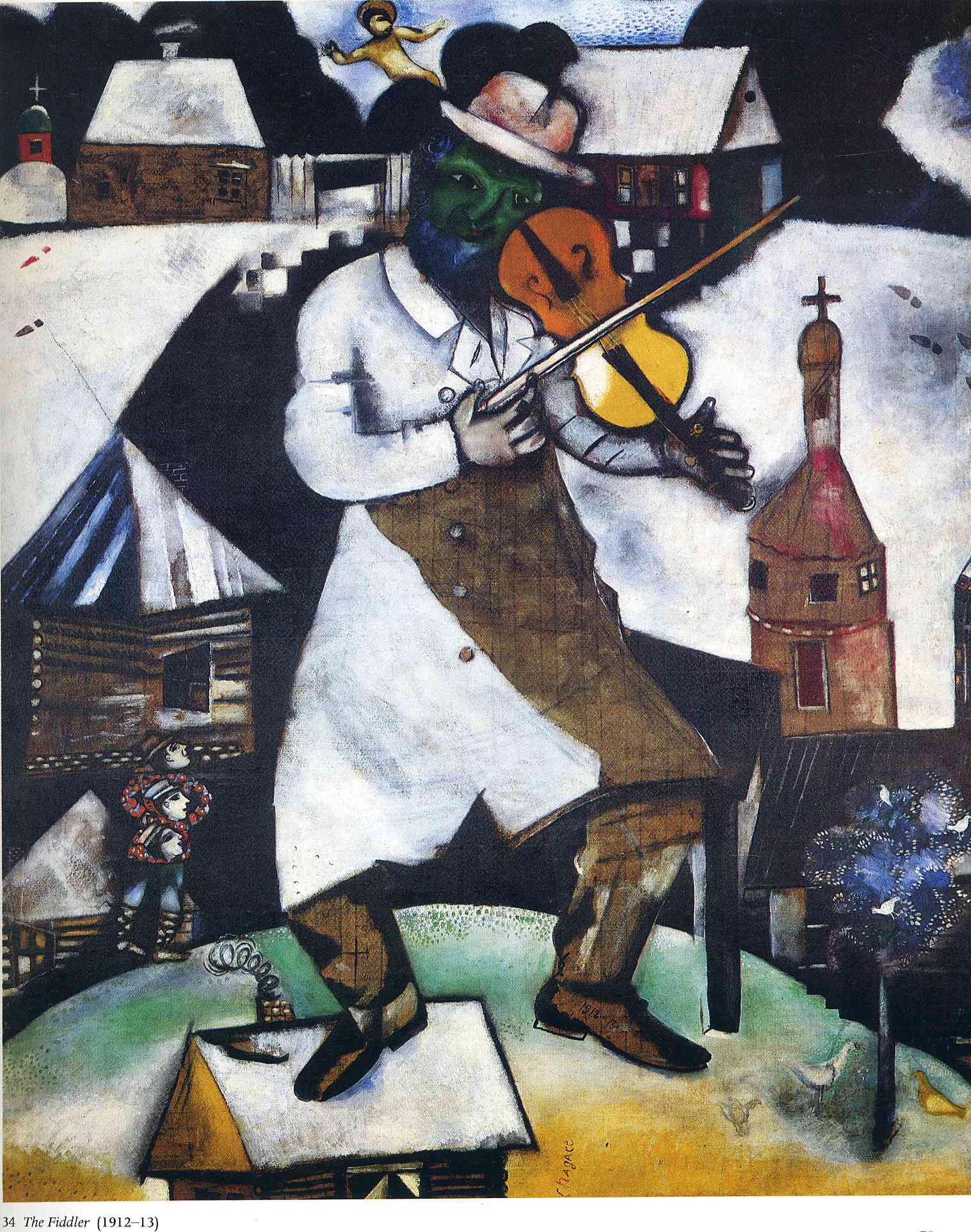
„Skrzypek” Marca Chagalla stoi na dachu tylko jedną nogą. Opiera się o zaśnieżoną powierzchnię lekko, samym czubkiem podeszwy brązowych półbutów - to ledwie muśnięcie, sugerujące wiotkość, lewitację ponad uśpionym miasteczkiem. Co dzieje się z drugą nogą? Kwestia spojrzenia. Dotyka półokręgu ziemi, z którą jest związana. Albo też całkiem zawisła w powietrzu, bo i chasydzkie melodie nigdy na grunt nie opadają, lecz, zupełnie przeciwnie, snują się ponad głowami niczym błękitne aniołki z wielu innych obrazów Chagalla, „malarza aniołów”.

Longplay "Gold Of Małkinia" - z tytułem przywołującym na myśl klasyczną żydowską pieśń „Jerusalem Of Gold” - to pierwszy cd-live-album w dyskografii zespołu. W warunkach koncertowych muzycy grają nowe utwory i znane z poprzednich płyt motywy muzyczne (niguny), rozciągnięte w czasie nierzadko do metrażu ponad dziesięć minut. Shofar zdecydowanie lepiej radzi sobie właśnie w dłuższych formach, czego dowodem są "Naket Nigun/Rumi Rumian", "Green Frogs In Human Milk" i "Spider Silk In The Shade" - według wszelkich prawidłowości najdoskonalsze nagrania w karierze tria. Pierwszy z wymienionych stanowi reinterpretację "Traditional Hasidic Melody I" z poprzedniej płyty studyjnej. Znajoma melodia zagrana jest intensywniej, z charakterem, a główną tego zasługą wielkie zaangażowanie Raphaela Rogińskiego w stopniowe zwiększanie tempa gry. Pod koniec kompozycja nabiera takiego rozpędu, jak gdyby muzycy wirowali w tańcu - a zatem zagadkowy tytuł staje się zupełnie jasny (Rumi, a raczej Dżalal ad-Din Muhammad ar-Rumi, mistyk suficki, był założycielem zakonu Wirujących Derwiszy).

Tytuły kompozycji kryją w sobie więcej ukrytych znaczeń. Przykładowo "Tamarisk Thickets Are Burning…" to zupełnie jasne odwołanie do gorejącego krzewu z Synaju, tamaryszku lub (według jednych) jeżyny krwistej, obsypującej się krwisto-czerwonymi kwiatami, albo (według innych) gązewnika akacjowego - który faktycznie rośnie na pustyni, więc biblijny prorok mógł go napotkać na swej drodze. Z kolei "Green Frogs In Human Milk" przekazuje hasłowo staroruską wiedzę na temat odpowiedniego sposobu przechowywania mleka, gdy nie posiadamy lodówki - wrzucenie pospolitych zielonych żabek do dzbana skutecznie przedłuża datę ważności. Udowodniły to nawet badania naukowe. Sam utwór natomiast w połowie swego trwania zupełnie zmienia charakter - staje się surowy i szarpany, ale dzięki temu możemy usłyszeć trójkę muzyków w zwięzłym, improwizowanym pojedynku.

Skoro przy muzykach jesteśmy, to warto zaznaczyć jedno. Rogiński, Moretti i Trzaska wznoszą się na wyżyny swoich możliwości - z pewnością umożliwiają im to warunki inne niż studyjne. Tajemnicą niezmiennie pozostaje dla mnie to, w jaki sposób z pozornie hermetycznego zbioru zapomnianych melodii chasydzkich potrafią wykrzesać tyle witalnej mocy. „Gold Of Małkinia” stanowi ukoronowanie dyskografii składu, album najpełniej realizujący obraną konwencję. Bo przecież Shofar, niczym „Skrzypek” Chagalla, dotyka koniuszkami stóp dwóch odmiennych materii, w tym wypadku muzycznych tradycji - chasydzkiej i free jazzowej - i łączy je z alchemiczną precyzją.

środa, 16 października 2013

Shofar - Ha-Huncvot (2013)

Mikolaj Trzaska - saxophone, clarinet
Raphael Rogiński - guitar
Macio Moretti - drums

KILOGRAM 026


By Adam Baruch

The Polish ensemble Shofar, founded by guitarist Raphael Rogiński, who also leads the excellent ensemble Cukunft, is a trio which also includes the iconic saxophonist / clarinetist Mikolaj Trzaska and drummer Macio Moretti. This is their second album, which consists of eleven pieces, eight of which are original compositions co-credited to the trio and three are their unique interpretations of traditional Hasidic melodies.

The album was recorded a couple of years following their debut, but was actually released only four years later. Musically it is a logical development of the approach established on the debut, which mixes pre-composed themes and improvisations, with strong influences originating in Eastern European Jewish music. Together with Cukunft and quite a few other ensembles the New Jewish Music emerges as one of the most interesting musical development on the Polish scene.

Shofar creates a very distinct sound, with the electric guitar sounding seemingly in conflict with the delicate clarinet, but strangely they somehow complete each other, and together with the percussive ornamentation create a wonderful amalgam, which proposes a new aesthetic. The various pieces represent many different moods, like anger, aggression, despair, peace, love and meditation, always playing just what is necessary and avoiding any meaningless excess. Overall the music is deeply engaging and has a direct impact, regardless if the listener has any Jewish roots or not. This is the real strength of this music.

There are, of course, also the individual talents of these musicians to be considered, in addition to their group performances, which deserve the listener's attention. Roginski, deeply rooted in rocky riffs, expands his vocabulary with ambient accompaniments and wall-of-sound strumming in the most intense moments. Trzaska, relatively restrained, sounds wonderfully mellow and melodic, but underneath his volcanic explosions simply wait for an opportunity to erupt. Moretti keeps a relatively low profile, although his contributions are quite essential to keep the entire creation together and are all performed with great fluency and confidence.

This music is truly beyond category and has little parallels in Poland or in the entire world for that matter. Although firmly clinging to the Improvised Music formulas, this music has a "soul" ("neshume" in Yiddish), which is simply absent in most improvised environments. This is perhaps New Jewish Music, but it also is a bridge between the past and the future in all musical areas for people who are willing to listen.

niedziela, 29 września 2013

Shofar - Shofar (2007)

Raphael Rogiński - guitar
Mikolaj Trzaska - saxophone, clarinet
Macio Moretti - drums

KILOGRAM 014


By Adam Baruch

Shofar is an ancient Jewish instrument, usually made of ram's horn, which has been part of the Jewish tradition since its origins. It is mentioned in the Bible frequently and was used to announce holidays and other special events, but later on the sound of the shofar has been also associated with Jewish mourning for the destruction of the Temple and the Diaspora. Hearing the intense and deeply moving sound of the shofar is a mitzvah for any Jewish person. In the contemporary Hebrew language the word Shofar has an additional meaning, referring to a means of communication spreading ideology, bearing news and expressing the opinion of a group of people. It can be a person (announcer, spokesman, representative) or a medium (newspaper, radio station, etc.).

Regardless of the motivation, which stood behind naming the Polish ensemble Shofar, in retrospect it somehow encompasses both of the meanings of the idiom. Founded by guitarist Raphael Roginski, who also leads the excellent ensemble Cukunft, the trio also includes the iconic musician Mikolaj Trzaska and drummer Macio Moretti. This is their debut recording, which consists of their unique interpretations of six pieces taken from the enormous collection of the great Jewish ethnomusicologist Moshe Beregovsky and two famous Jewish liturgical pieces.

The sound of the trio amalgamates several quite diverse backgrounds: Roginski's guitar and Moretti's drums have a distinct Rocky feel whereas Trzaska is deeply embedded in Jazz and Improvised Music. However, there is no clash whatsoever here and the musicians manage to create a unique and quite specific ambience, which transforms the traditional Jewish music into contemporary world of musical expression, without trivializing it in the process, which is often done by the numerous Polish so called Klezmer ensembles, which often never go anywhere beyond being a chaltura (i.e. a worthless and artistically insignificant enterprise).

The onset of Shofar, which followed in the footsteps of Cukunft, announced (like a shofar does) the Renaissance of the contemporary Jewish music in Poland, that in retrospect turned out to be a most fruitful and fascinating development on the local scene, which is exploding with activity in many other musical areas as well. Is spite of the fact that there are practically only very few Jews living in Poland these days, the Jewish Culture, which bloomed on the Polish soil for almost a thousand years, has been apparently implanted into the local cultural fabric so deeply that even the Holocaust didn't manage to destroy it. The seeds planed in that soil are now breaking out with an astonishing vitality. Both Roginski and Trzaska were about to create many other Jewish-related projects later on, including a second album together.

But beyond the historical significance of this album, this is also superb music. The vitality and intrinsic joy of the Eastern European music passes over with full glory to the world of sound created by Shofar, which is also full of reflection, mystery and melancholy, mixed with the humor and ecstasy eminently present in Jewish music. The individual statements by these three musicians are of course first-rate but their magic exists primarily as members of the collective ensemble.

This album, although recorded only less than a decade ago, is already a part of a classic statement made on the Polish Jazz scene, opening a new chapter of the convoluted Jewish-Polish cultural (and otherwise) relationships, made in memory of the countless shofar blasts that reverberated over the Polish soil in the past Millennium.

poniedziałek, 8 lipca 2013

LXMP - Back To The Future Shock (2013) ***1/2

LXMP  (duo)

Piotr Zabrodzki – Korg Mono/Poly, Korg Delta, Korg MS-20, Alesis QS6, Akai VX-73, Minimoog, Talkbox, Programming

Macio Moretti – drums, Korg MS-20, MicroKorg, Vocoder, Dutch Hardcore

Back To The Future Shock (2013) 

By Maciej Nowotny

LXMP is band consisting basically of bassist Piotr Zabrodzki and drummer Macio Moretti. But on every release they are also accompanied by a 'guest star'. On their first album "Broken Strings" they invited Japanese guitarist Kazuhisa Uchihashi, on second "Lost Tuba" - American drummer and keyboardist Chad Poppe and on third "The Posenburg Concertos" - Japanese guitarist Tabata Mitsuru.

Music of LXMP is all about the deconstruction. Deconstruction is European idea originating from analytical approach of Bacon and Descartes but in its modern form was popularized by anthropologist Claude Levi Stauss. In last century it become omnipresent being applied in philosophy, sociology, psychology and also in art: most of all in literature, painting and music. Sonorism, punctualism, dodecaphony, serialism and other similar genres can be seen as the emanation of this idea. Irrespective of all differences between them they share one common feature: they were unanimously hated by the audience which boycotted any concert hall or orchestra which dare to play it.

Eventually all this movement come down to popular music as evidenced by such projects as LXMP. But the problem with deconstruction is that it cannot stand on its own. Without some base, foundation and reference it is meaningless like bones without flesh. That is the case with first two albums by this band which I criticized thoroughly in this review. I was so discouraged by them that I passed third one but when I've seen the title of their fourth release, clearly referring to the legendary Herbie Hancock's disk from 1983, I decided to give them 'second chance'.

"The Future Shock" is one of the most famous Hancock's albums, partly due to the huge commercial success of the hit song "Rock It". The result of cooperation with Bill Laswell and bunch of other musicians it was influenced as much by pop as by funk and electronic dance music of that era. The connoisseurs of Hancock's recordings however do not value it particularly high and to be honest the time treated this album rather cruelly. But that was exactly what LXMP needed to implement their deconstruction method successfully: material was easy to transform and the language simple to distort.

The result of such a transformation turned up to be a little bit funny, perhaps odd but... fresh! Its appeal reminds me a little a charm of old Monty Python sketches. Lovely but hopelessly old school. But are we not lately kind of fascinated by old school clothes, cars, behaviors? Perhaps that is just my overstatement but is it not a respect or even love that shines through all this irony present on this album? Respect and love toward music long-forgotten, seriously outdated but in its kind perfect, composed and performed on level often unattainable in present decadent times? That's at least what I like to imagine during repeated rehearsals of this material which prove something more than pitiful waste of time as was the case with first two albums of this duo. 

Finally let me add that like on previous discs Zabrodzki/Moretti invited a guest for his recordiding in person of Thymme Jones from band called Cheer-Accident who plays drums on the title track.


Tracklist:
1. Rockit
2. Future Shock
3. TFS
4. Earth Beat
5. Autodrive
6. Rough
7. Rockit (Mega Mix)*

niedziela, 5 maja 2013

Shofar - Ha-Huncvot (2013)

Shofar 

Mikołaj Trzaska - alto saxophone, bass clarinet
Raphael Rogiński - guitar
Macio Moretti - drums

Ha-Huncvot (2013)


By Ken Shimamoto

The existence of this trio, which released its debut album in 2007, speaks to the resurgence of Jewish Culture in Poland since the demise of communism there. Inspired by the pioneering work of ethnomusicologist Moshe Beregovski (whose work documenting indigenous musics in the Ukraine, Poland and Moldavia beginning in the 1920s is roughly analogous to that of John Lomax in the American South), the three musicians – guitarist Raphael Roginski, altoist and bass clarinetist Mikolaj Trzaska and drummer Macio Moretti – apply a free jazz spin to centuries-old Hasidic musical forms including negunim (wordless melodies) or freylakhs (meant to accompany dancing). In their intent, they are not unlike John Zorn’s Masada quartet, which plays Jewish themes as Ornette Coleman might have reimagined them ca. 1959, or Masada trumpeter Dave Douglas’ Tiny Bell Trio, a unit whose instrumentation Shofar mirrors, which reinterprets Eastern European melodies in a free jazz manner.

The three collaborators in Shofar come from diverse backgrounds. Guitarist Roginski, who divides his time between Warsaw and Tel Aviv, has also explored Jewish themes in the ensemble Cukunft, but his musical interests range from early blues players to ‘60s rock, from Bach to idiosyncratic American composers Harry Partch and Henry Cowell. Reedman Trzaska, who runs the Kilogram label with his wife, was a founder of the important ‘90s group Milosc, which released two albums with American trumpeter Lester Bowie. His collaboration with brothers Marcin and Bartolomiej Oles yielded the seminal 2002 album Mikro Musik. Drummer Moretti, a graphic artist and label impresario as well as a musician, was a member of the disco-metal fusion outfit Baaba, played bass in the grindcore band Antigama, and drummed in “Eastern country” unit Mitch and Mitch.

On the opening “I Can See By My Nose,” Roginski employs a brittle, wiry tone that contrasts with the vocalized sound of Trzaska’s alto. Behind them, Moretti provides responsive support, utilizing a varied percussion palette with sensitive restraint. After a lengthy opening exposition in which he and Trzaska intertwine sinuous lines for a couple of minutes, Roginski embarks on a solo in which he explores the contours of the melody in detail. Then Trzaska sings an agonized lament, based on the same intervals. Gradually they wind down, Roginski’s staccato bursts of notes ricocheting around Trzaska’s soulful wail.

On the first two of the three “Traditional Hasidic Melodies”, the two tonal instruments essay the themes in unison, then create abstractions around them. “Traditional Hasidic Melody III” has an almost blues-like feeling (except for the flat 2nd); one can imagine Don Cherry building a multicultural symphony around such material. Here, Roginski and Trzaska play the melody straight, only varying their dynamics while Moretti responds with a mounting intensity. On the closing “Diner With Giant,” Roginski strums rapid-fire choked chords while Trzaska unleashes keening multiphonics against Moretti’s splashing cymbals and clattering drums – an exorcism for the ghosts of the pogroms and the Holocaust. “Think Better About Germans” sounds like a prayer for closure – a somber and reflective theme, with Trzaska on bass clarinet.

There’s humor here as well. “You and Cookie = Happiness” features anguished, wordless vocalization that could be a carryover from Moretti’s grindcore days – or an invocation of Sesame Street’s Cookie Monster. On Ha-Huncvot, Shofar covers the whole gamut of human emotion with an attractive musicality that invites repeated listening.


niedziela, 3 lutego 2013

Slawomir Jaskulke – Live Gdynia Summer Jazz Days 2001 (2002)

Slawomir Jaskulke - piano
Maciej Sikala - saxophone
Piotr Lemanczyk - bass
Tomasz Sowinski - drums

ALLEGRO 003


By Adam Baruch

This is the debut album by Polish Jazz pianist / composer Slawomir Jaskulke, recorded live in a classic trio / quartet setting with saxophonist Maciej Sikala, bassist Piotr Lemanczyk and drummer Tomasz Sowinski. The album presents five original compositions; three of which are by the leader and two are by Sikala. The first two numbers are performed by the trio and the other three by the quartet.

Jaskulke is considered as one of the most brilliant representatives of the young generation of Polish Jazz pianists and his achievements during the first decade of the 21st Century are indeed remarkable and include performances around the globe and numerous recordings as leader and sidemen (including those with the veteran Polish Jazz icon Zbigniew Namyslowski). He has also composed music for theatre and cinema.

Anybody listening to this album at the time of its release should have expected great things from Jaskulke, as it is a truly outstanding debut. The trio numbers present Jaskulke as an amazing piano virtuoso, playing in a unique style, which is incredibly percussive and powerful, whereas the quartet numbers present his gentler side as a balladeer, playing beautifully restrained melodic phrases or as an ensemble player of great sensitivity. Such incredible versatility is very rare indeed and when executed with a magic touch like the one he presents here, it is simply marvelous. Considering the fact that Jaskulke was only twenty two years old at the time of the recording one must admit that this is a discovery of an extraordinary talent.

Musically the trio and the quartet are also quite different, with the material written by the leader being much more open and often freely structured, whereas the numbers written by the saxophonist are pretty standard mainstream Jazz compositions, both very good, but not special in any way. In a sense it seems as if these two different settings belong on two separate albums, but what was done can not be undone, so one should enjoy the fact that this marvelous music was captured for posterity and we can listen to it again and again.

The rhythm section performs exactly as expected, changing the volume and presence according to the specific requirements of the moment, always there when one expects them to be, keeping perfect time (which is not always easy here) and modestly displaying another level of virtuosity. Together the ensemble sounds like an unstoppable locomotive, which runs amok, especially in the last tune.

This is definitely an album every Jazz piano lover should listen to, sooner or later, an experience he'll never regret nor forget. Wholeheartedly recommended!

niedziela, 28 października 2012

LXMP & Kazuhisa Uchihashi - Broken Strings (2012); LXMP & Chad Popple - Lost Tuba (2012)


OK, here in Poland I am kind of known for my inclination towards free jazz. Not only that! I am often despised for embracing sometimes too eagerly anything which is surprising, forward-thinking and creative. Yet, it doesn't mean that I will buy ANYTHING which is wrapped-up as modern, improvised music. Unfortunately most of it is simply bad or even very bad. To say the truth it is much more bad music in so-called avantgarde than in mainstream. These days it is really difficult to find completely hopeless mainstream album. But with new things critics and audience often feel awkward about delivering harsh judgements. 

I am less cautious and I want to say openly: both these records are total artistic failure. There is nothing in this music but chaos. There is no idea, no coherence and no skills. I am VERY disappointed especially because of pianist Piotr Zabrodzki. He is best known from very good avant pop band called Baaba (check "Disco Externo"). But I liked him the most from small niche projects like excellent "Nemanga" with tubist Zdzisław Piernik or amazing "Trylobit" in duo with Artur Lawrenz.

Music on these two albums (being parts of even larger project... God saves us!!!) is taking an aesthetique from punk rock and pretends to be free in spirit but in fact it is just idealess cacophony. There was a lot of noise on above mentioned previous projects by Zabrodzki too but I was hoping he will develop his musical language and be able to deliver some original message. Nothing like this happened on these two CDs. Just more banging, more mindless hitting on drum set (the only thing in which Macio Moretti excels). If that is the direction in which LXMP is driving, this is LAST trip I wanted to make with them...


LXMP & Kazuhisa Uchihashi


Kazuhisa Uchihashi - guitar
Piotr Zabrodzki - bass
Macio Moretti - drums

Broken Strings (2012)


LXMP & Chad Popple 


Chad Popple - drums/vibraphone
Piotr Zabrodzki - bass
Macio Moretti - drums 

 Lost Tuba (2012)


sobota, 28 lipca 2012

Alte Zachen - Total Gimel (2012)

Alte Zachen (band)

Raphael Roginski - guitar
Bartek Tyciński - guitar
Macio Moretti - bass
Ola Rzepka - drums
+
Milosz Pekala - silent percussion

Total Gimel (2012)

The group was founded by Raphael Rogiński (known from Shofar, Wovoka and Cukunft) and the line-up was complete when Ola Rzepka (Drekoty, Wovoka), Bartek Tyciński and Macio Moretti (Mitch and Mitch, Baaba, Paristetris) joined. All these musicians are known for their typically hectic musical activities and this time around they met to perform Chassidic music mixed with rock'n'roll, surf and psychedelia.
Their first album – entitled Total Gimel – is meant to be a tribute to surf culture which is being observed by band members (without their active participation, though). The band name itself is derived from the slang of Israeli scrap metal collectors and reflects Alten Zachen's attitude: nowadays they play music that sounds as if it was made in the 60's even though it's been part of the culture for 150 years now. And its roots are 5000 years old. (source: http://www.ladoabc.com/)


Who doesn't know the Beach Boys' hit "Surfin' USA'? Who hasn't dreamed of wide Californian beaches as a child?
Today however, getting one's brain fried in the West Coast sun seems to be somewhat pretentious.
Raphael Rogiński, one of the most creative Polish musicians of the last decade, along with his friends, proposes a much more exciting adventure. He himself calls it Jewish 'surf-religious' music. 
Hats off to whoever who knows what that's supposed to mean.
The secret is partially unveiled by Szmuel Luria, known as 'the surfing Rabbi', whose concept of waves as the roots of the cabbalistic tree of life Geburah inspired Rogiński. 
Rogiński and the other group members have meanwhile accustomed us to the fact that they defy pigeonholing by producers, critics or audience. Most of their projects are unique and stamped by every individual musician.
Jewish 'surfing' refers once again in Rogiński's career to Jewish tradition. It is not surprising therefore that his guitar reminiscent of Marc Ribot is mixed with enchanting Jewish motives and American psychedelic music from the 70's. (source: www.tzadikpoznanfestival.pl)


Tracklisting:
1. 222
2. 236
3. 111
4. 31
5. 82
6. 99
7. 91
8. 96
9. 170
10. 65
11. 64

piątek, 6 kwietnia 2012

Baaba Kulka - Baaba Kulka (2011)

Baaba Kulka

Bartek Weber - gitara
Gaba Kulka - wokal, klawisze
Piotr Zabrodzki - bas, klawisze
Tomasz Duda - saksofoy, flet, klarnet
Maciej Moruś - perkusja

Baaba Kulka (2011) 

In 1984, Iron Maiden brought a massive stage show through Eastern Europe, performing in five different Polish cities. The love Eddie and the gang showed for the other side of the Iron Curtain comes back here, with Baaba Kulka’s off-the-wall tribute to the metal giants. Polish electro-jazz-rock band Baaba provides the background music, lurching between Klezmer, gypsy-rock, and even something that sounds like lounge music from the future. Singer Gaba Kulka unleashes big, jazzy singing overtop, belting the hell out of fan favorites you’ve never heard like this before. The set brings out the cartoonish fun that always lurked not too deep within Iron Maiden songs, but without an ounce of irony or condescension. It’s a boisterous celebration by a collective that may not have a metal bone in its body, but invite big grins while you sing (and dance) along with the wildest crossover album this side of Warsaw.

Track listing: 01. The Number of the Beast; 02. Wrathchild; 03. Aces High; 04. To Tame A Land; 05. The Ides of March; 06. Prodigal Son; 07. Children of the Damned; 08. Flight of the Icarus; 09. The Clairvoyant; 10. Still Life


Source: covermesongs.com (Album of the Year 2011)

czwartek, 16 lutego 2012

Roginski, Masecki, Moretti - 2525252525 (Lado ABC, 2008)

Roginski, Masecki, Moretti (trio)

Raphael Rogiński - guitar
Marcin Masecki - Wurlitzer, pianino
Macio Moretti - drums

2525252525 (Lado ABC, 2008)

This is Polish new music at its best! These young musicians have strong personalities, fresh ideas and great skills. Raphael Rogiński united in his language: jazz, modern chamber and folk (klezmer) music influences. Masecki is well known for his fascination with classic music revival. His dream is new interpretation of Bach "The Art of Fugue". But in his short life this prodigiously talented pianist was also able to make significant contributions to Polish mainstream, avantgarde and even avantpop! That is a territory where he met with Macio Moretti whose inclinations are toward indie pop or anything which is ironic and iconoclastic. 

The outcome of such a meeting is indeed inspiring! Music is open, spontaneous and moving. Musical landscapes as created by this trio evoke dramatic emotions. At the same time it is all very coherent and engaging from one tune to the other. Multiple, broken and overlapping rhythms with shreds of melodies all build the mood of decadence but a very charismatic one. It may be not easy to munch for those yet not acquainted with modern avantjazz but once you catch on this music you will find yourself totally immersed in its world and enchanted by. Astonishing achievement! 

Track listing: 1. Zacz; 2. Skutek; 3. Hacz; 4. Szinn; 5. Tokad; 6. A-le!; 7. Dropsy; 8. Uolovnol; 9. Idom; 10. Nakonieczny


By Maciej Nowotny
http://kochamjazz.blox.pl/html


sobota, 23 lipca 2011

Bassisters Orchestra - Numer Jeden (Asfalt, 2006)

Bassisters Orchestra
Bunio (sampler, vokoder)
Emade (sampler)
Fisz (voc)
Wojtek Mazolewski (bass)
Macio Moretti (drums)
Mikołaj Trzaska (sax)

Asfalt, 2006


Great musicians from both Polish jazz and avantgarde (Wojtek Mazolewski, Mikołaj Trzaska, Macio Moretti) and hip-hop (Fisz, Bunio, Emade), great concept because since Miles Davis "Doo Bop" there is plenty of space for creative meetings of these two stylistics but unfortunately this project is failure. It is neither good hip hop nor good avantgarde. It ceratinly is not good jazz. Best tunes on this album are when Fisz is singing in hip hop style (like in "Uma Pergunta") or when Mazolewski, Trzaska, Moretti plays something close to jazz (like in "Lassister"). But when they try to cooperate, to blend, to interchange it simply does not work. Great pity! Since I like a lot both avantjazz and hip hop! Summarizing, my respect for "bassisters" they tried but unfortunately trial itself is not a success...

A piece of entirely hip hop tune from this album:


Author of text: Maciej Nowotny 

...

sobota, 25 grudnia 2010

Baaba - Disco Externo (2010)

I always wondered at men who once married stop to look at pretty girls. So despite being enamored in jazz since many years I am always ready to take chances and put music other-than-jazz in my CD player provided it has grace and charm. 
In this case there is plenty of both with very significant drop of wit which makes music of this quartet extremely attractive to me. They juggle with conventions, cut well known tunes and paste them in wrong places, wrong moods, in wrong tempos but it is all their own music, individual voice, creative attitude toward musical reality. 
I am certain that they would not like too big words to be used in order to describe their style but I want to underline that this music is of very high quality reminding me such musicians as for example Ben Lamdin whose Nostalgia77 made so big impact on British scene few years ego. Like Lamdin Bartosz Weber (guitar, sampler) started as DJ working entirely on sampled music and gradually turned into mostly acoustic line-up with some top jazz musicians as Tomasz Duda (saxophones, flute, sampler), Piotr Zabrodzki (bass, keyboards, voice) and Macio Moretti (drums). Other bands and artists they may be compared with are Quantic Soul or Amon Tobin. 
Light-hearted, easy-to-listen, dance-like but at the same time ironic, creative, avant-garde. So if you are in music for improvisation and need an album that your girl friend might like as well this extraordinary disc may be one of few albums that may reconcile both your and her tastes.
Please, check this page for more info and music samples:

Zobacz też: