Translate

Pokazywanie postów oznaczonych etykietą Janczarski Borys. Pokaż wszystkie posty

środa, 14 października 2026

Borys Janczarski Ensemble feat. Larry Browne – „Love is”

Borys Janczarski Ensemble feat. Larry Browne

Borys Janczarski Ensemble:
Borys Janczarski – saksofony tenorowy i sopranowy, flet, instrumenty perkusyjne
Jacek Namysłowski – puzon, saksofony altowy i sopranowy, flet, instrumenty perkusyjne, aranżacje
Joanna Gajda – fortepian
Michał Jaros – kontrabas
Patryk Dobosz – perkusja

Goście specjalni:

Larry Browne – trąbka, śpiew, aranżacje
Robert Majewski – trąbka, flügelhorn
Mary Rumi – śpiew

Album: „Love is”

Wydawca: Polskie Radio SA Agencja Muzyczna (https://sklep.polskieradio.pl/) 2025

Tekst: Marek Demidowicz


Płyta hołd dla starych dobrych czasów, kiedy to jazz był synonimem elegancji i dobrego smaku.

środa, 9 listopada 2022

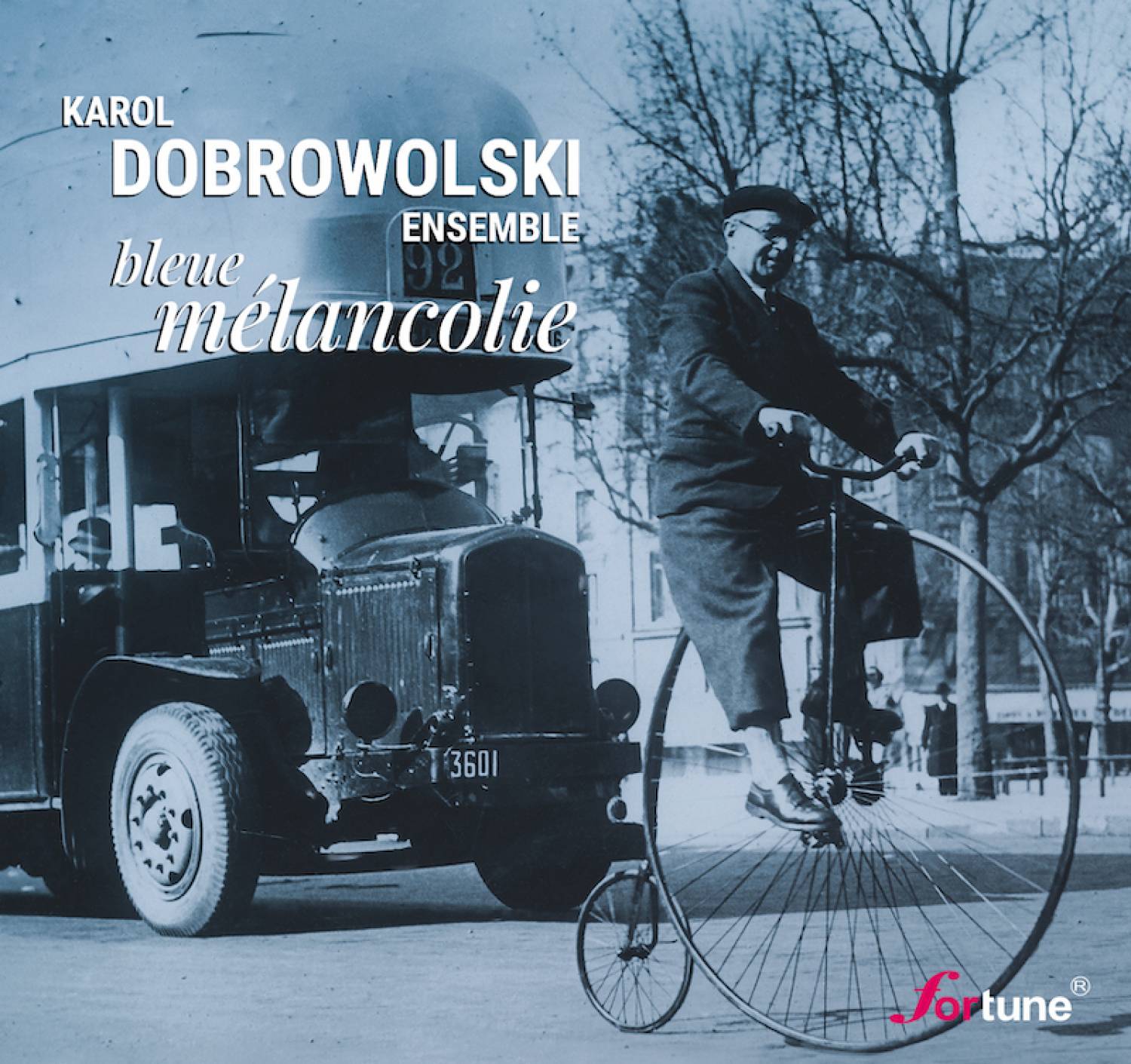
Karol Dobrowolski Ensemble - Blueue Melancolie (2022)

Karol Dobrowolski Ensemble

Karol Dobrowolski – skrzypce
Roby Lakatos – skrzypce [2, 3, 5, 7]
Alexis Cárdenas – skrzypce [2, 3, 7]
Piotr Sapieja – skrzypce [3, 5]
Raphaël Maillet – skrzypce [3, 4, 5, 6]
Giovanni Mirabassi – fortepian [4, 6, 8]
Hugues Duchesne – fortepian [1, 2, 3, 5]
Greg Zlap – harmonijka [4]
Borys Janczarski – saksofon tenorowy [1, 6]
Sébastien Gastine – kontrabass [1, 2, 3, 5, 6 ,8]
Nicolas Favrel – perkusja [1, 2, 3, 5, 6, 8]

Blue Melancolie (2022)

Wydawca: For Tune

Autor tekstu: Dominik Konieczny


Karol Dobrowolski, mimo że jest bardzo aktywnym muzykiem od wielu lat, to dopiero teraz miał okazję wydać autorski album. Bardzo się do tego zadania przygotował i w temacie wyboru kompozycji i muzyków, których zaprosił do nagrania.

Jest bardzo eklektycznie: podstawą zdecydowanie jest jazz, ale mamy całe spektrum nut i rytmów, od latino czy folku, przez muzykę filmową, po szeroko rozumianą muzykę współczesną.

Jest to bardzo mainstreamowa muzyka i to absolutnie nie jest zarzutem - nie jest ani nudna ani trywialna czy banalna. Jest bardzo otwarta, być może wbrew zamiarom i tytułom, jest także bardzo optymistyczna. Jakbyśmy poszli w motyw filmowy, to byłby to zdecydowanie film Woody Allena o Polskiej emigracji w latach 60’ w Paryżu. ¯\(ツ)/¯

Dla tych, którzy lubią skrzypce, skrzypiec i skrzypków jest w bród; skrzą się w szczególności skrzypce Roby Lakatosa i Alexisa Cárdenasa. "Tango el dios" na troje skrzypiec “saute” jest iście boskie - Frank Zappa, po współpracy z Jeanem Luc-Pontym wysnuł teorię, że skrzypce prowokują do popisywania się, do pewnej formalnej przesady i ja kupuję tę teorię - nawet jak nam się uda znaleźć skromnego skrzypka, to będzie to boska skromność wirtuoza. Takie jest intro do "Tango el dios", dotyka absolutu, a potem rozwija się tak, że nawet moje drewniane biodra w to tango idą.

Mamy kilka bardzo ładnych utworów, gdzie dobry temat przewodni i świetna sekcja, dają przestrzeń do solowych i wspólnych improwizacji, strzelistych kulminacji i szczęśliwego rozwiązania ("Petrucciana", "La valese blue melancolie"). Jeśli błąkają nam się stereotypy, to skrzypce wiążą się z pewną dozą szaleństwa i tego dostarczają "La promenade des montagnards" i "Ivresse slave". W "Apres le pluie" zaczyna się od snucia pomiędzy (zdecydowanie paryskimi) kałużami, ale potem przychodzi harmonijka ustna. Greg Zlap przypomina o nieziemskim potencjale tego niepozornego instrumentu.

Jest też piękna kompozycja "Choppinote", dedykowana mamie Karola Dobrowolskiego, w której prawdziwy popis daje Giovanni Mirabassi na pianinie. Całość zamyka, przenosząca mnie literalnie w lata sześćdziesiąte "Les empreintes polonaises a Paris".

Jest dobrze, każdy kto lubi skrzypce, jazz, petit Munstera i medoca odnajdzie się na tym albumie - gorąco i szczerze polecam.


piątek, 20 listopada 2020

Janczarski & Siddik 4tet - Contemplation (2020)

Janczarski & Siddik 4tet

Borys Janczarski - tenor saxophone
Rasul Siddik - trumpet, flute
Michał Jaros - double bass
Kazimierz Jonkisz - drums

Contemplation

FOR TUNE 0147

By Adam Baruch

This is a live recording at the Warsaw 12 on 14 Jazz Club by the quartet co-led by Polish Jazz saxophonist Borys Janczarski and veteran American trumpeter Rasul Siddik, with Polish bassist Michał Jaros and veteran drummer Kazimierz Jonkisz. Together they perform seven pieces, six of which are Jazz standards and one is an original composition by Siddik.

The album offers a warm and authentic club atmosphere but the music is all strictly within American mainstream boundaries and is completely predictable. This is a third recorded collaboration between Janczarski and Siddik released on the For Tune label, all of which follow the same well established pattern of Bebop oriented music making, which has hardly changed in the last 70 years or so.

As for the performances, despite the fact that Siddik has a well earned reputation of playing with some very important American Jazz names in the past, his playing here (and on the two other a.m. albums) is very shaky and unimpressive, Janczarski is much more vigorous but not really notable and only the excellent rhythm section is up for the job, especially Jaros whose bass parts are the absolute highlights of this album.

Overall this music might have been nice to listen to at the club while enjoying a drink, but has no lasting value beyond that. At least the music is well recorded by Tomasz Pierchała, the club owner and persistent Warsaw Jazz scene activist.

sobota, 31 października 2020

Janczarski & McCraven Quintet - Liberator (2018)

Janczarski & McCraven Quintet

Borys Janczarski - tenor saxophone
Rasul Siddik - trumpet, flutes, percussion, vocals
Joanna Gajda - piano
Adam Kowalewski - double bass
Stephen McCraven - drums

Liberator


FOR TUNE 0132

By Adam Baruch

This is the second album by the Polish/American quintet co-led by Polish saxophonist Borys Janczarski and American drummer Stephen McCraven, with Polish pianist Joanna Gajda, bassist Adam Kowalewski and American trumpeter Rasul Siddik. Together they perform seven tunes, five of which are originals (three by Gajda and one each by Janczarski and McCraven) and two standards, one each by Woody Shaw and Billy Eckstine. The music was recorded live at Warsaw's 12 on 14 Jazz Club and another venue and has a superb sound quality.

The music is a continuation of the direction established on the quintet's debut album, i.e. straightforward mainstream American Jazz, very well played and presenting solid composition, but hardly innovative or challenging. It seems that although the majority of the quintet members are Polish musicians, the spirit of the music is completely enthralled within the American traditionalism, which changed very little since the heyday of Bebop half a Century ago.

But innovation aside, this is still a perfectly enjoyable Jazz album, with highly professional playing, which is much more relaxed and less constrained that on the debut album, and full of joy and energy. Considering the fact that mainstream Jazz has a large following the world over, this album should be appealing to many Jazz lovers. It also proves that European musicians are able to play Jazz as well as any American musician, even within the mainstream idiom, and the "White Man Can't Jump" is a lot of bull.

It is good to see that the quintet gives more exposure to the compositions by Gajda, who is undoubtedly a very skillful and talented composer. Her piano solos are also amongst the most interesting moments on the album. Overall this is a nice mainstream effort, which should be very enjoyable to a wide range of mainstream Jazz audiences, which presents well woven tunes and heartfelt performance as well as superb sound quality.

piątek, 30 marca 2018

Janczarski & McCraven Quintet - Liberator (2018)

Janczarski & McCraven Quintet 

Borys Janczarski - tenor saxophone
Rasul Siddik - trumpet, flutes, percussion, vocals
Joanna Gajda - piano
Adam Kowalewski - double bass
Stephen McCraven - drums

Liberator


FOR TUNE 0132

By Maciej Nowotny

"Liberator" to druga płyta, po wydanym w 2015 "Travelling East West", nagrana przez kwartet Janczarskiego dla For Tune. Wcześniej nazwisko Janczarskiego kojarzyło mi się raczej z odgrzewaniem starych jazzowych kotletów, jednak kiedy rzuciłem okiem na skład jaki zebrał, zdębiałem! Wyjaśnienie dlaczego znajdziecie w opisie w/w płyty. W konkluzji tego tekstu kończę zdaniem, że mam ochotę dać Janczarskiemu kolejną szansę.

Brzmi trochę protekcjonalnie, ale już wyjaśniam, z jakiego powodu tak stawiam sprawę. Czy wiecie na przykład, że w Polsce działa w tej chwili w przybliżeniu 17 (sic!) wydziałów, na których naucza się jazzu? Problem tylko w tym, że uważam, że jazzu nauczyć się nie da. Można nauczyć grać jazz, ale jazzu już nie, bo jazz zaczyna się wtedy (przynajmniej dla mnie), gdy muzyk zaczyna mówić od siebie i najlepiej na swój własny, niepowtarzalny sposób. Odgrywanie po raz enty Body&Soul na modłę Coltrane'a nie ma dla mnie jazzowego sensu, sorry... oryginał zawsze będzie lepszy!

Każdy zatem muzyk jazzowy staje przed wyzwaniem jak coś powiedzieć od siebie, wyróżnić się, zaproponować coś nowego. Przez taki pryzmat patrzę właśnie na płyty nagrane przez Janczarskiego dla For Tune. Udało mu się wyróżnić przez to, że zaprosił do współpracy bardzo ciekawy zestaw współpracowników. Ponadto udało mu się nieco zaskoczyć przez to, że osadził muzykę na tych płytach w tradycji afroamerykańskiego jazzu (co jak niektórzy słusznie wskażą jest tautologią) o chicagowskiej proweniencji. Bo jest ona ciągle artystycznie aktualizowana i piękne już wydała owoce w tym kraju (szukajcie na przykład krążków Damasiewicza w katalogu tejże For Tune).

Ale z drugiej strony pierwszy album w sensie stricte muzycznym nie zachwycił mnie. Uderzał brak zgrania muzyków, stylistycznie było trochę od sasa do lasa, ciekawe kompozycje szczególnie Gajdy słabo rezonowały z resztą materiału. Saksofon lidera brzmiał momentami sztampowo, chwilami w sposób zabawny przypominając styl Pharoaha Sandersa. W rezultacie pozostałem sceptyczny. 

Co zatem przyniosła druga płyta? Otóż mogę śmiało i z satysfakcją stwierdzić, że przyniosła korektę tych wymienionych, jak i innych niedoskonałości. Zgranie muzyków jest o niebo lepsze. Płyta stylistycznie zyskała na jednorodności, co dodało jej energii i charyzmy w oddziaływaniu. Być może pomogło to, że muzyka jest zapisem koncertu granego na żywo. To bardzo sprzyja szczególnie temu rodzajowi jazzu, nawiązującemu do tradycji AACM. Wreszcie podoba mi się ewolucja Janczarskiego. Przestał "szpanować" grając pod Sandersa, stara się mówić swoim własnym językiem, sprawdza się jako lider. 

Podsumowując, dostaliśmy tym razem kawał porządnej muzy, z czystym sercem do polecenia każdemu. Ilość "perełek" do odkrycia jest niemała: nietuzinkowi goście ze Stanów, mało znana, a warta odkrycia pianistka, doskonały bas i saks Janczarskiego, po którym zaczynam powoli spodziewać się kolejnych dobrych rzeczy.

Janczarski & McCraven Quintet – Travelling East West (2015)

Janczarski & McCraven Quintet

Borys Janczarski - tenor saxophone
Rasul Siddik - trumpet, flutes, percussion
Joanna Gajda - piano
Adam Kowalewski - double bass
Stephen McCraven - drums

Travelling East West


FOR TUNE 0081

By Maciej Nowotny

Wydana już dobrych kilka lat temu, bo w 2015 roku przez renomowaną polską wytwórnię ForTune, płyta "Travelling East West" jest okazją do ćwiczenia moich już trochę zapomnianych (kilka lat przerwy w pisaniu) jazzowych umiejętności. Co bowiem robi miłośnik tej muzyki, gdy do jego łapek trafia nowy krążek? Przede wszystkim analizuje skład...

O Borysie Janczarskim zrobiło się głośno (przynajmniej w Warszawie) akurat wtedy, gdy o mnie zrobiło się cicho. Dlatego może się zdarzyć, że czytający te słowa będzie wiedzieć na temat tego muzyka więcej niż je piszący. Syn wspaniałej aktorki Barbary Wrzesińskiej, ukończył prawo na Sorbonie i dołączył do grona tych jakże licznych w polskim jazzie dyletantów (od laryngologa Komedy począwszy, a na kolejnym prawniku Macieju Fortunie skończywszy), którym ta muzyka tyle zawdzięcza. Najważniejsze, że podobno muzyk ten ma talent, dobre brzmienie i entuzjazm, bez którego, jak pisał Ralph Waldo Emmerson, "nic wielkiego narodzić się nie może"...

Prawdziwe zaskoczenie jednak przychodzi przy nazwiskach trębacza i flecisty Rasula Siddika i perkusisty Stephena McCravena! Możecie zapytać z jakiego powodu? Otóż należą one do muzyków związanych z AACM, czyli Association for the Advancement of Creative Musicians, a ten drugi był przez kilkadziesiąt lat stałym współpracownikiem samego Archie'ego Sheppa. Dla wyjaśnienia: AACM to założona w Chicago przez czarnych muzyków amerykańskich w połowie lat 60-tych i ciągle działająca organizacja odpowiedzialna za stworzenie jednej z najciekawszych estetyk we współczesnym jazzie i w dużej mierze powodująca, że jazz pozostaje aktualny jako fenomen artystyczny. Ma też znaczenie i to niemałe dla polskiej odmiany tej muzyki, by wspomnieć tylko wkład Lestera Bowie w rozkwit legendarnej w latach 90-tych Miłości (w której karierę zaczynał Leszek Możdzer) czy niezwykłe zjawisko, jakim był odbywający się w Poznaniu festiwal Made In Chicago.

Ale to jeszcze nie wszystko, bo zespół muzyków uzupełniają wybitny polski kontrabasista Adam Kowalewski i, last but not least, pianistka Joanna Gajda. Gajdę obserwuję od czasu jej debiutu "Heaven Earth" i bardzo cenię zwłaszcza jej kompozycje, które są także jedną z silniejszych stron tego albumu. 

A jaka jest muzyka na tej płycie? Poniżej próbka, która pozwoli usłyszeć choć parę dźwięków. W telegraficznym skrócie można powiedzieć, że Janczarski gra nieco w stylu Pharoaha Sandersa, muzycy amerykańscy trochę jakby szukali dobrej komunikacji z naszymi, bas Kowalewskiego grzeje wręcz niesamowicie, kompozycje Gajdy się wyróżniają, a całość... więcej pozostawia znaków zapytania niż daje odpowiedzi. Jednak pomimo to jest w tej muzyce coś, co zaciekawia i dobrze wróży na przyszłość. Już pisząc ten tekst dowiedziałem się, że niebawem ma się ukazać w tej wytwórni kolejny drugi album tej formacji. I wiecie co, mam ochotę dać mu szansę.

czwartek, 4 maja 2017

Łukasz Korybalski – CMM (2017)

Łukasz Korybalski

Łukasz Korybalski - trumpet, flugelhorn
Borys Janczarski - tenor saxophone
Michał Tokaj - piano
Andrzej Święs - bass
Łukasz Żyta - drums
Zbigniew Namysłowski - alto saxophone (2)
Bogusz Wekka - shaker (4)

CMM

ALLEGRO 034

By Adam Baruch

This is the debut album as a leader by Polish Jazz trumpeter/composer Łukasz Korybalski, known primarily for his work as composer of cinematic music. This album presents the music Korybalski wrote for the film "Całe Mnóstwo Miłości" (hence "CMM"), performed by a quintet which features the leader on trumpet and also includes saxophonist Borys Janczarski, pianist Michał Tokaj, bassist Andrzej Święs and drummer Łukasz Żyta; a most formidable team. Saxophone icon Zbigniew Namysłowski and percussionist Bogusz Wekka guest on one tune each. The album presents six original compositions, all by Korybalski.

The music is absolutely stunning from start to finish, typical melancholic Polish Jazz very closely reminiscent of early cinematic music by Krzysztof Komeda, with the same melodic hooks one just can't stop humming after the music is over. The similarity is so close, that if I didn't know what album is playing, I'd suspect that a newly discovered Komeda album is on. This is not only reflected by the music, the melodic approach and the harmonic progressions, but also by the way the quintet performs the music, which has a tinge of wonderful "out fashioned" nostalgia to it. Even the one relatively "free" composition on the album is spiritually almost identical to Komeda's famous composition "Astigmatic".

The instrumental performances are all top notch. Korybalski displays some Miles Davis modal influences, all being in the most elegant form, Janczarski has a warm and smooth tone and Tokaj, one of Poland's best pianists, sadly relatively rarely heard on albums, is a dream. The superb rhythm section cements the lineup with amicable support for the soloists and wonderful drive.

Albums like this one are a persuasive proof that contemporary melodic mainstream can be intelligent, creative, fascinating and aesthetically fulfilling. It simply has something that sets it apart from thousands of other mainstream albums, firmly standing in a class of its own. It also shows why European Jazz left the American Jazz in a fifty years slumber. Overall this is one of the best Polish Jazz albums that I have had the pleasure to listen to in many years. It is perfect in every way, it bridges the tradition with contemporary ideas, it pays tribute to its cultural background and sources; in short it is it! Absolutely not to be missed!

środa, 9 marca 2016

Janczarski & McCraven Quintet – Travelling East West (2015)

Janczarski & McCraven Quintet

Borys Janczarski - tenor saxophone
Rasul Siddik - trumpet, flutes, percussion
Joanna Gajda - piano
Adam Kowalewski - double bass
Stephen McCraven - drums

Travelling East West


FOR TUNE 0081

By Adam Baruch

This is an album by the Polish/American quintet co-led by Polish saxophonist Borys Janczarski and American drummer Stephen McCraven, with Polish pianist Joanna Gajda, bassist Adam Kowalewski and American trumpeter Rasul Siddik. Together they perform eight tunes, seven of which are originals (three by Janczarski, two by Gajda and one each by McCraven and Siddik) and one is a standard by Woody Shaw.

The music is standard mainstream Jazz, with nice compositions and eloquent execution, but sadly not remarkable in any way. Except for the singular Siddik's tune, which has an interesting World Music motif, the rest of the material is well within the Bebop or even Swing tradition, which has been already exploited to death decades ago. The musicians are all professionals, but one can find hardly anything out of ordinary by any of them on this album. Siddik's presence in these proceedings seems completely accidental, considering his past musical path.

Of course many Jazz enthusiasts still like this kind of music, especially in America, where it still rules, but honestly it contributes nothing to the development of Jazz nowadays and recording such music, especially in Poland, as good as it might be, does not make much sense. Overall it is a pleasant, well played mainstream album, which surely will please many mainstream listeners, but is definitely not something I'd play again after enjoying it once.

sobota, 28 listopada 2015

Kazimierz Jonkisz Energy – 6 Hours With Ronnie (2015)

Kazimierz Jonkisz Energy

Borys Janczarski - tenor saxophone
Tomasz Grzegorski - tenor saxophone
Ronnie Cuber - baritone saxophone
Robert Murakowski - trumpet
Jan Smoczyński - piano
Wojciech Pulcyn - double bass
Kazimierz Jonkisz - drums

6 Hours With Ronnie

FOR TUNE 0070

By Adam Baruch

This album documents the meeting between veteran Polish Jazz drummer Kazimierz Jonkisz and his ensemble Energy with legendary American baritone saxophonist Ronnie Cuber. The following musicians also take part in the recording: saxophonists Borys Janczarski and Tomasz Grzegorski, trumpeter Robert Murakowski, pianist Jan Smoczyński and bassist Wojciech Pulcyn. The album was recorded at the fabulous Studio Tokarnia, owned by Smoczyński, who also engineered and mastered the album, with the usual spectacular sonic result. The music includes six compositions, two of which are originals by Pulcyn, one is by Cuber and the remaining three are standards.

The music is, as expected, straightforward mainstream Jazz, with the two Pulcyn tunes being by far the most refreshing pieces on this album. It is executed without a flaw by all the participants, although the session seems to be lacking any high energy or particular joy of life, which is typically present on the best Jazz recordings.

Overall this is a nice, well played and well recorded mainstream Jazz album, which is no different from thousands of similar albums recorded before. As such it contributes nothing to the Jazz milieu and with all due respect is simply banal. Smoczyński plays some great introvert piano parts and Pulcyn, as always, keeps time beautifully, but other than that it's all déjà vu. Of course since baritone saxophone is not heard very often, this is a good opportunity to enjoy this beautiful instrument being played well.

środa, 14 sierpnia 2013

Kazimierz Jonkisz - Jazz Energy (2013) *** 1/2

Kazimierz Jonkisz

Borys Janczarski - tenor saxophone
Tomasz Grzegorski - tenor & soprano saxophone
Jerzy Małek - trumpet [4,5,6]
Wojciech Pulcyn - double bass
Kazimierz Jonkisz - drums

Jazz Energy (2013)

By Maciej Nowotny

Kazimierz Jonkisz, born in 1948, is a legend of Polish jazz and arguably one of the best drummers of its golden era along with equally prominent Czesław Bartkowski or Janusz Stefański. He collaborated with almost every significant jazz musician in Poland, among them those the greatest like Zbigniew Namysłowski, Mieczysław Kosz, Adam Makowicz, Michał Urbaniak or Jan Ptaszyn Wróblewski. He was also one of the first or even the first drummer in Polish jazz who created and led his own ensemble. With his bands he recorded for acclaimed Polish Jazz series in 1980 "Tiritaka" and in 1987 "Outsider" which count among the best albums in whole history of jazz music in Poland.

Unlike many of his colleagues from that era who either became inactive or have nothing interesting to say, Jonkisz continued to record important albums also in new "capitalistic" times. Perhaps it helped him that since 1992 he was working with younger generation as a teacher of drumming at well-known Warsaw Music College. Anyway he was able to establish relationships with younger players and appeared on such successful albums as, only very lately, Piotr Lemańczyk's "Naha Poeple" (2009) or Joanna Gajda's "Heaven Earth Earth Heaven" (2011). But admirers of his talent have waited impatiently for his own project and been longing for times when his albums gave direction to jazz in our country.

Those times are now well over, at least in my opinion, and those giants of the past like Namysłowski, Karolak, Urbaniak and even Stańko himself are not any more so influential as before. Zimpel, Trzaska, Rogiński, Masecki, Obara are now among those who go in the vanguard of improvised music in Poland. Still it is great news that Jonkisz has once again assembled the band and at last recorded new material. Especially since it will probably fulfill all expectations of his fans as it is a straight-ahead continuation of a language he used on his famous albums of 80ties. Music is clearly build upon hard bop legacy, there is no innovation here, no breaking old structures which is now the sign-of-times of new jazz music worldwide. Instead it is nostalgic journey to those magic decades of 50ties and 60ties when in the US, thanks to great black musicians, jazz music exploded as new kind of art and way of the living. 

Luckily it does not sound even a bit antique or outdated, as many such albums do, which it owes as much to the youthful vigour of the leader as to the enthusiasm of younger generation of players who surround him and who are, at least as jazz scene in Poland is concerned, the creme-de-creme of our mainstream jazz. Borys Janczarski on tenor saxophone, Tomasz Grzegorski on tenor and soprano saxophones, Jerzy Małek on trumpet plus Wojciech Pulcyn on doublebass are creating a great team full of dedication which makes this classic jazz sounds fresh and invigorating. Incidentally, as in a fourth tune titled "Confidence", this jazz energy is joined by a stroke of genius once again proving that in this kind of music good melody means everything. All in all this CD is mandatory for all Polish jazz fans, even if it was for this one wonderful tune!


wtorek, 30 listopada 2010

Joanna Gajda Quartet - Heaven Earth Earth Heaven (2010)

When I was young I trained for a swimmer, usually swimming in sprint relays, being young however I preferred to swim solo. To my objections my old and experienced trainer always responded in such words: "Maciej, only the strongest teams may field winning relay, that's why I appreciate medals in relays many times more than solo ones". That is very much true in jazz as well and that is also why this recording is so astonishing. Because all of a sudden from the deepest ranks of Polish Jazz team has come forth Joanna Gajda and recorded the CD that is simply outstanding!

Most of data to this article I take from interview Mrs Gajda gave to Jan Cegiełka in Jazz Forum November issue. We learn from it that Mrs Gajda graduated piano from renowned Katowice Music Academy. She is now teaching herself in Kalisz Music Academy but she testifies that only two years before she has became assertive enough (through influence of Piotr Wojtasik to whose mentorship she owes a lot) to start enlisting musicians to her own band. And she managed to gather around herself very talented ones: Borys Janczarski (tenor saxophone) has very smoky sound and his virtuosity reminds the style of magnificent Bobby Watson; Andrzej Święs is promising young bassist, his play provides rock-solid base for this hard-swinging jazz; Sebastian Frankiewicz is quick as a silver young drummer who already recorded interesting album Hendrix Piano with Artur Dutkiewicz Trio this year. As guest appears on this album: Marian Pawlik ona bass, star drummer Kazimierz Jonkisz and fantastic singer Natalia Przybysz.

And exactly the little cameo of Natalia Przybysz who sings wonderful tune to words of St Luke Gospel Don't be afraid little flock is where I would like to turn spotlights first. Vocal of Przybysz is simply smashing, thoughtful and yearning piano of Gajda is flying sky high and support by Swięś & Frankiewicz sensitive enough to blow your mind away! I find no words apt to express my wonder what they do to mainly modal jazz in one piece after another: yes, it is mainstream play but their ability to invoke emotions is revelatory. Strong gospel connotations are omnipresent in this music pointing clearly enough where an idea of the title of album comes from. Finally let me add that all these excellent compositions are written by Joanna Gajda. Great jazz woman appeared in Polish Jazz. People please believe in her! And I do and shall wait for her next CD very impatiently...

I you want to buy this record check this link: http://wwylomie.com/heaven-earth-eart-heaven-cd.html


If you want to listen to more music from this album: http://www.myspace.com/joannagajdaquartet

Author of text: Maciej Nowotny (http://kochamjazz.blox.pl/html)


Zobacz też: